
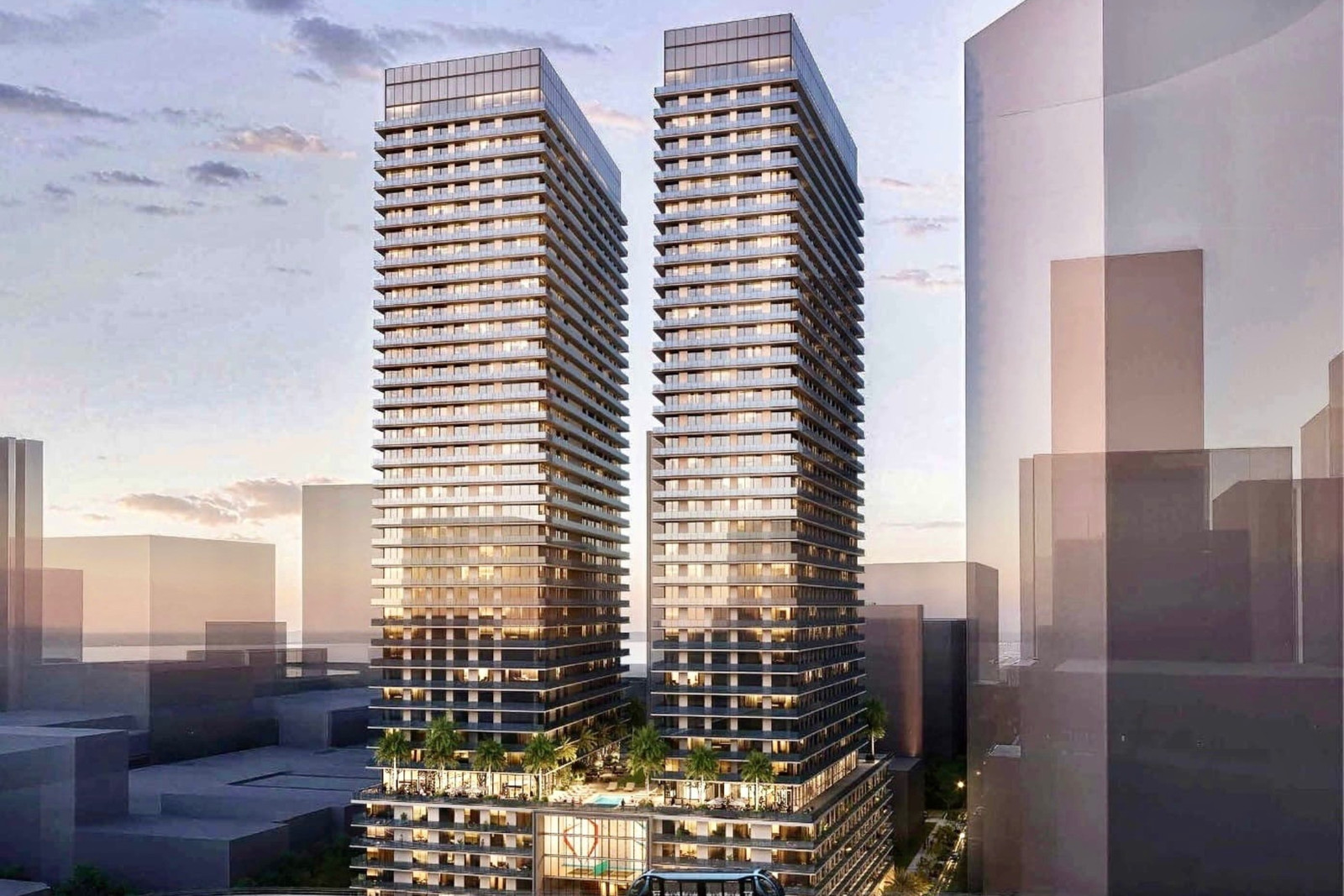
Plans for a major Downtown Miami residential development have been submitted by Namdar Realty Group Acquisitions and Dispositions, bringing 1,344 new housing units to the urban core. Known as Namdar 101, the proposed project features twin 42-story skyscrapers designed by architectural firm Behar Font. The multi-tower proposal aims to replace an existing commercial property with high-density residential housing.
Namdar 101 Planned for 101 SE 1st Avenue
The dual-tower development is slated for 101 SE 1st Avenue, a site currently occupied by the Ultramont Mall. Plans call for replacing the current mall structure to accommodate two high-rise towers that will significantly expand residential living options in the central business district.
Unit Layouts and Retail Breakdown in Downtown Miami Residential Development
The proposal details a unit mix weighted heavily toward smaller floor plans, complemented by street-level retail space.
- Studios: 398 units
- One-Bedroom Residences: 802 units
- Two-Bedroom Residences: 144 units
- Ground-Floor Commercial: 7,832 square feet of retail space
Building amenities outlined in the plans include multiple pools, fitness centers, resident lounges, and coworking spaces spread across the complex.
Two-Phase Delivery Planned for the High-Rise Project
Construction of the project is designed to occur in two distinct phases. Plans specify that the northern 42-story tower will be built first, followed by the second tower in a subsequent phase.
Market Context for Downtown Miami Real Estate Buyers and Investors
The proposal reflects ongoing developer interest in transforming older commercial properties within Downtown Miami into dense residential developments. Converting sites like the Ultramont Mall into twin residential towers adds substantial rental or buyer inventory to the market. Prospective buyers and real estate investors evaluating the urban core should follow how multi-phase residential completions influence long-term inventory levels and street-level commercial dynamics across the neighborhood.
Source: World Red Eye