
The official approval of the Coconut Grove playhouse redevelopment marks a decisive milestone after two decades of debate regarding the future of the historic theater site. Closed for nearly 20 years, the iconic venue has officially received approval from Miami city commissioners, who voted to pass Miami-Dade County’s comprehensive revitalization plan. This major decision clears the way for construction to begin, balancing historic preservation with new community and commercial uses.
The century-old landmark has long been at the center of discussions over how best to revitalize the area while honoring its architectural past. With this long-awaited municipal approval, project leaders can now advance a $58.4 million plan that promises to reactivate a core block of the neighborhood.
Miami Commission Grants Approval for $58.4 Million County Plan
The approval by Miami city commissioners brings clarity to a long-standing debate that spanned two decades. Over the years, city and county officials, preservation groups, and community members discussed various proposals to address the dilapidated state of the closed venue.
The primary challenge throughout the debate was identifying an approach that protects the historic heritage of the century-old landmark while establishing a financially sustainable operational model for the future. By greenlighting Miami-Dade County’s $58.4 million proposal, commissioners selected a plan designed to solve both historic preservation concerns and ongoing site viability.
Key Features of the Coconut Grove Playhouse Redevelopment Project
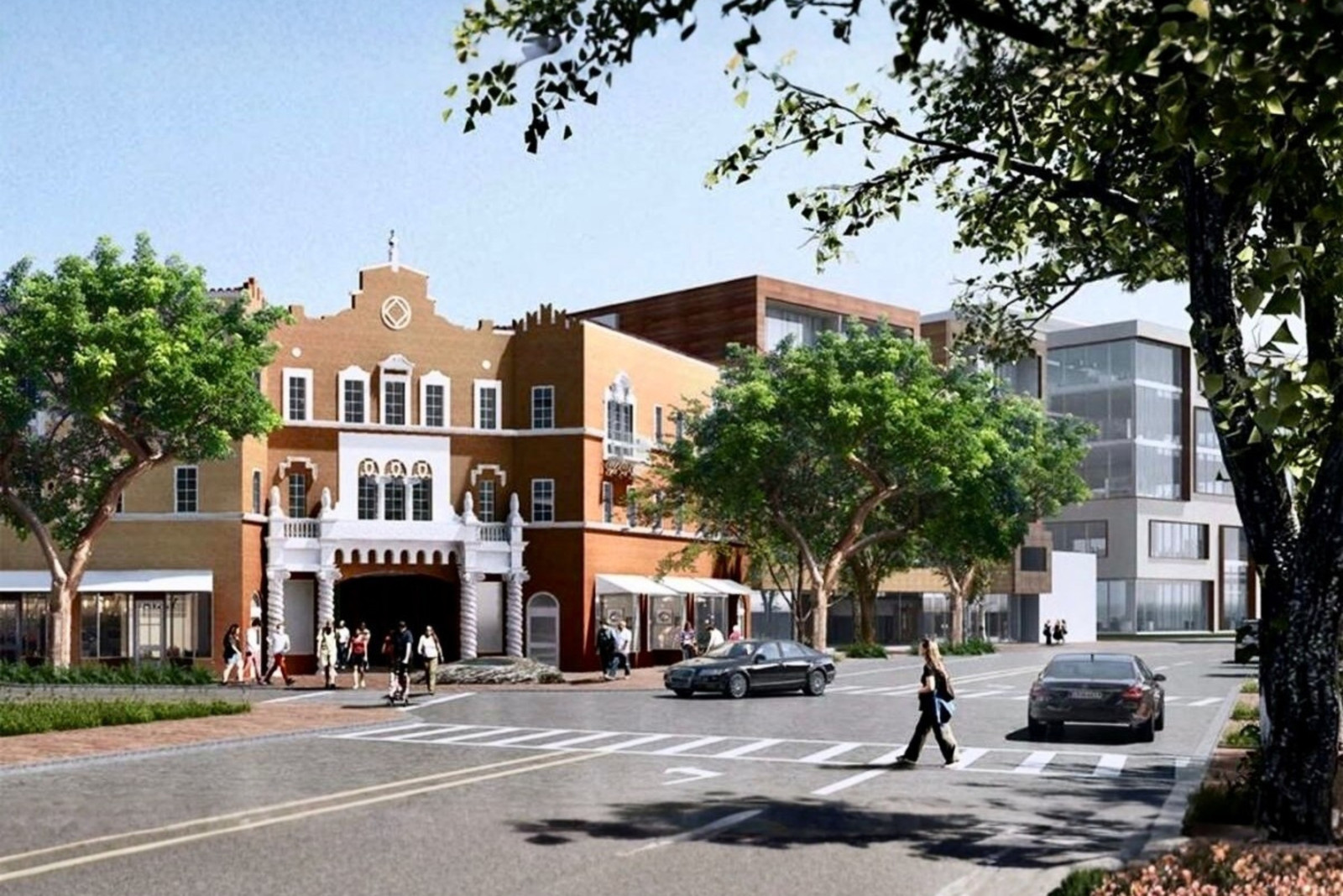
The approved redevelopment plan introduces a balanced combination of cultural, commercial, and civic spaces tailored to the site. The architectural proposal carefully preserves key historic elements while constructing brand-new facilities to serve public demand.
Key highlights of the $58.4 million Coconut Grove playhouse redevelopment plan include:
- Restored 1926 Façade: Historic preservation efforts focusing on restoring the original 1926 exterior façade of the landmark theater.
- New Performance Venue: Construction of a state-of-the-art 310-seat theater venue designed for modern live performances.
- Commercial and Creative Facilities: Integrated space dedicated to retail, offices, and educational programming.
- Public Outdoor Space: An open-air plaza created to encourage community gatherings and foot traffic.
- Parking Infrastructure: A dedicated 289-space parking garage to accommodate visitors, patrons, and surrounding commercial needs.
Preserving History and Reconnecting the West Grove Community
In addition to structural restoration and practical facilities, the project places strong emphasis on social and historical context. The redevelopment specifically aims to reconnect the iconic playhouse with the neighboring historically Black West Grove community, which sits immediately adjacent to the venue.
By blending restored 1926 historic elements with educational space, retail, and open-air public gathering areas, officials envision the site as an inclusive neighborhood anchor. The open plaza and shared civic facilities are planned to serve as physical bridges linking different segments of the local community.
What the Playhouse Revitalization Means for Coconut Grove Real Estate
For buyers, residential owners, and commercial real estate investors analyzing the Coconut Grove market, infrastructure and cultural investments provide valuable insight into neighborhood development trends. The resolution of a 20-year dispute regarding a high-profile municipal site removes long-standing uncertainty for adjacent commercial corridors.
While the project does not alter residential zoning directly, major public projects often influence neighborhood accessibility, streetscape vitality, and local foot traffic. Real estate observers monitoring Coconut Grove will watch how the addition of retail spaces, office areas, a 289-space parking garage, and the 310-seat venue enhance overall neighborhood activity as construction unfolds.
Source: World Red Eye