
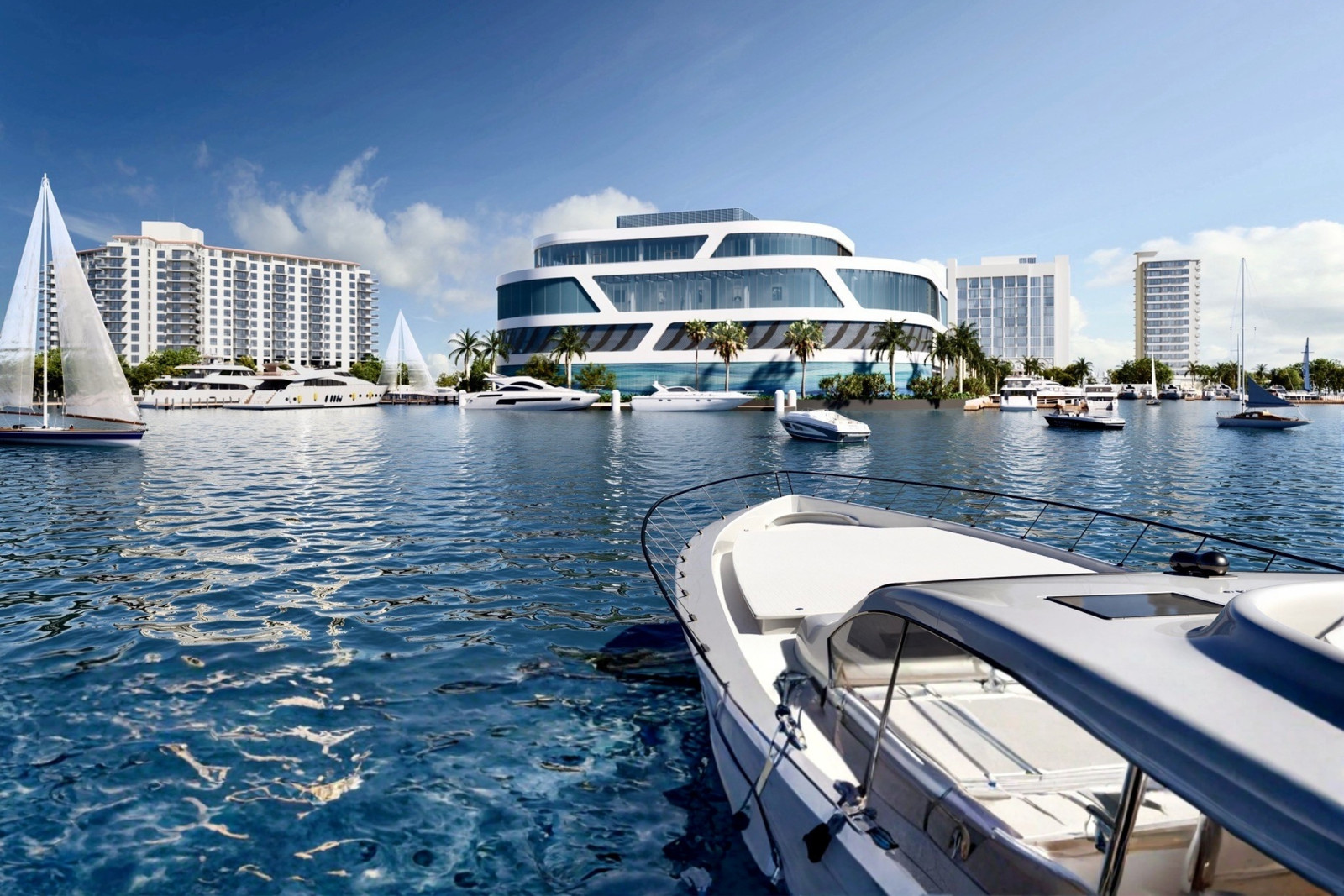
Plans for a major Fort Lauderdale waterfront destination are moving forward as Capital Group Ventures partners with the City of Fort Lauderdale on a $220 million project named The Water District. Scheduled for completion in 2028, this public-private partnership aims to reshape the beachfront peninsula into an active, year-round hub designed for both local residents and tourists.
The project represents a substantial redevelopment of the coastal land, replacing underutilized space with interactive community spaces, marine educational venues, and enhanced public access along the Intracoastal Waterway. By blending civic infrastructure with cultural attractions, the city and its venture partners seek to establish a refreshed identity for the peninsula.
Transforming Fort Lauderdale’s Beachfront Peninsula
At the center of The Water District is a collection of cultural and aquatic facilities meant to celebrate the regional environment. The proposed layout incorporates immersive marine exhibits alongside a brand-new Fort Lauderdale Aquarium, creating dedicated educational space for visitors of all ages.
Athletic and historic heritage also play a primary role in the design. The site will house the International Swimming Hall of Fame experience, highlighted by the tallest dive tower in the Western Hemisphere. To complement these major venues, the development plan features waterfront and rooftop dining options, versatile event spaces, and an elevated public promenade overlooking the Intracoastal.
Key Features of the Fort Lauderdale Waterfront Destination
The public-private partnership covers both commercial entertainment features and crucial civic upgrades. A quick overview of the major components planned for the site includes:
- New Fort Lauderdale Aquarium and interactive marine exhibits.
- International Swimming Hall of Fame experience showcasing the tallest dive tower in the Western Hemisphere.
- Waterfront and rooftop dining options paired with adaptable venue spaces for events.
- Elevated public promenade offering scenic views overlooking the Intracoastal.
- Over $53 million in public infrastructure improvements funding critical coastal work.
- Dedicated Water Taxi dock and expanded public waterfront access points.
- New Ocean Rescue headquarters built to support coastal safety operations.
- New seawall installation to strengthen coastal protection along the peninsula.
Over $53 Million Dedicated to Coastal Infrastructure
In addition to tourism and recreational amenities, the agreement allocates more than $53 million toward essential civic infrastructure updates. These public works include the construction of a new seawall to improve coastal management, an updated Ocean Rescue headquarters to serve beachgoers, and a dedicated Water Taxi dock to support local waterborne transportation.
Together, these additions aim to significantly expand public access to the shoreline while supporting safety and transit logistics across the area. Developers estimate that once fully operational, this new Fort Lauderdale waterfront destination will boost annual visitation on the peninsula from fewer than 5,000 people today to as many as 400,000 visitors each year.
Market Context for Buyers and Real Estate Investors
Public-private investments of this magnitude often draw close attention from market observers, property owners, and prospective real estate buyers in South Florida. Significant municipal capital allocation toward public infrastructure, coastal seawalls, and civic amenities reflects broader efforts to maintain and modernize valuable waterfront districts.
For buyers and investors considering property near Fort Lauderdale’s coastal corridor, understanding civic capital commitments provides insight into public infrastructure planning and community activity drivers. However, real estate market performance remains subject to overarching economic conditions, local inventory levels, interest rate environments, and construction delivery timelines. Keeping track of long-term civic projects helps market participants evaluate how local neighborhoods evolve over time.
Source: World Red Eye