
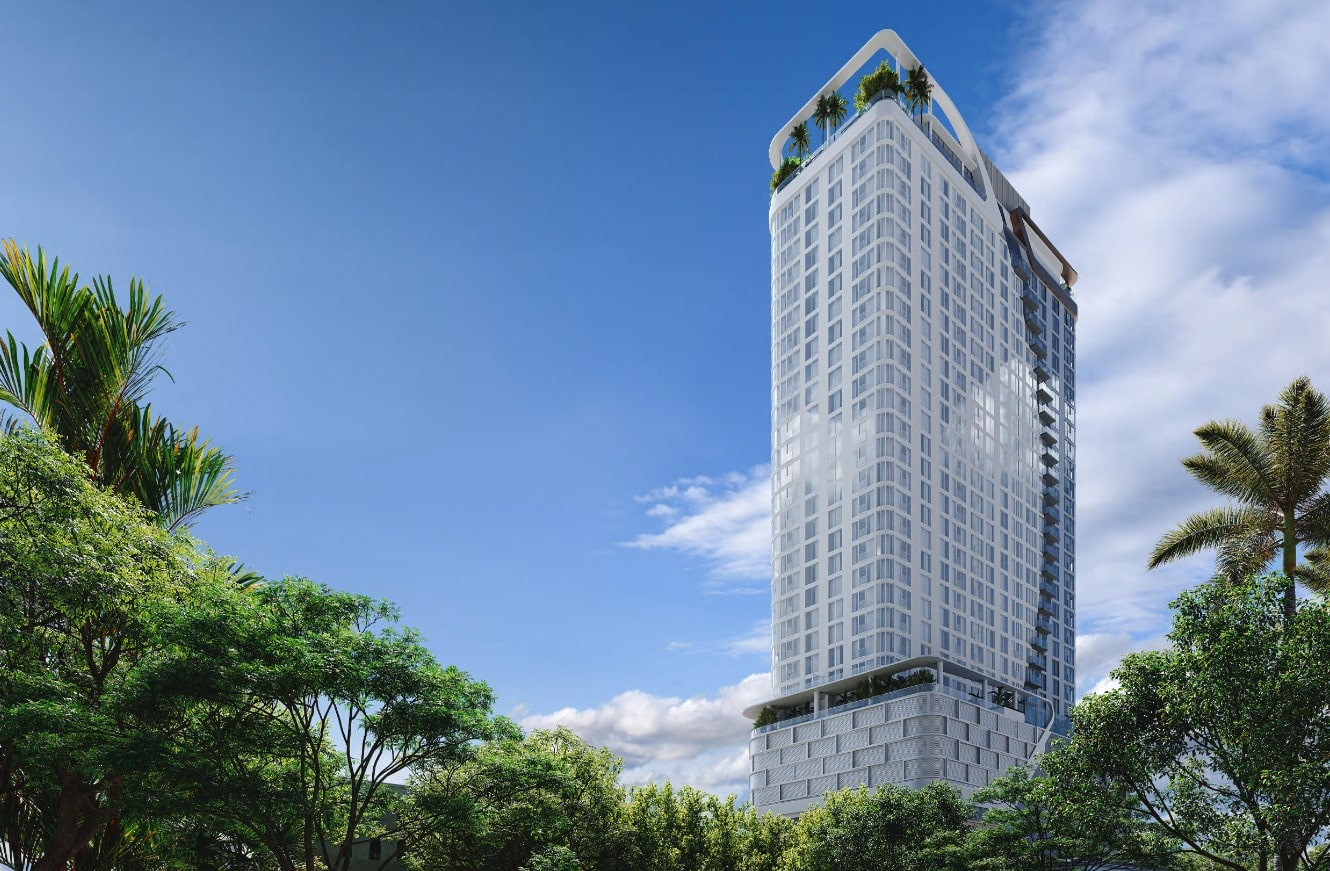
Construction is officially underway on a new Omni District luxury tower, bringing fresh momentum to one of Miami’s rapidly transforming neighborhoods. Developed by Sabet Group, the upcoming 33-story project known as 1600 Edgewater has started foundation work at 1600 NE 2nd Avenue. This development represents a major financial commitment, with total investments exceeding $93 million.
Architectural design for the rising building is spearheaded by the renowned firm Kobi Karp. Reaching an approximate height of 384 feet, the structure will introduce 282 luxury rental residences to the local market. The floor plans are designed to accommodate diverse tenant needs, featuring a mix of studio, one-bedroom, and two-bedroom apartment layouts.
Key Features of the Omni District Luxury Tower
The 1600 Edgewater development combines modern residential living spaces with substantial commercial and parking infrastructure. Beyond individual residential units, the building will offer a full suite of upscale amenities for residents and visitors alike.
- Total Residences: 282 luxury rental apartments featuring studio, one-bedroom, and two-bedroom layouts.
- Affordable Component: About 7% of units set aside for households earning at or below 60% of Area Median Income.
- Commercial Space: Nearly 9,519 square feet reserved for commercial uses.
- Parking Infrastructure: 352 dedicated parking spaces integrated into the building design.
- Lifestyle Amenities: Rooftop pool, rooftop restaurant, and dedicated outdoor dining facilities.
- Architecture: Designed by Kobi Karp, reaching approximately 384 feet across 33 stories.
- Total Capital Investment: Valued at $93 million-plus.
In addition to luxury amenities, community accessibility remains part of the blueprint. Approximately 7% of the total residential units are set aside as affordable housing, specifically designated for households earning at or below 60% of the Area Median Income.
Commercial Space and Rooftop Amenities at 1600 Edgewater
Street-level integration plays a key role in the project plan. With nearly 9,519 square feet of commercial space, 1600 Edgewater aims to contribute active retail or service space to the surrounding streetscape. Parking needs are also factored into the project design, which incorporates 352 parking spaces for residents and guests.
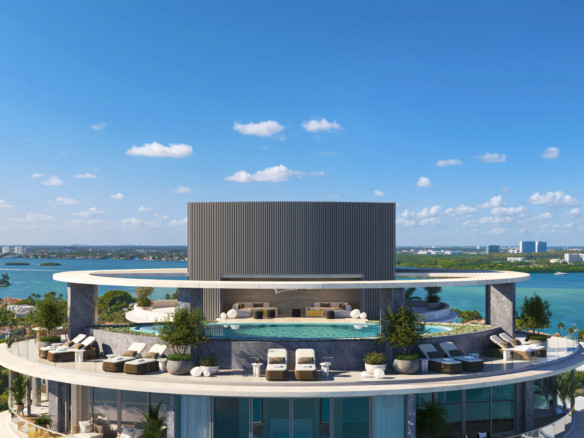
On the upper levels, the building features dedicated entertainment and hospitality spaces. Highlights include a rooftop pool paired with a rooftop restaurant, along with outdoor dining areas that take advantage of the elevated views over the surrounding urban landscape.
Surrounding Developments in the Omni District High-Rise Boom
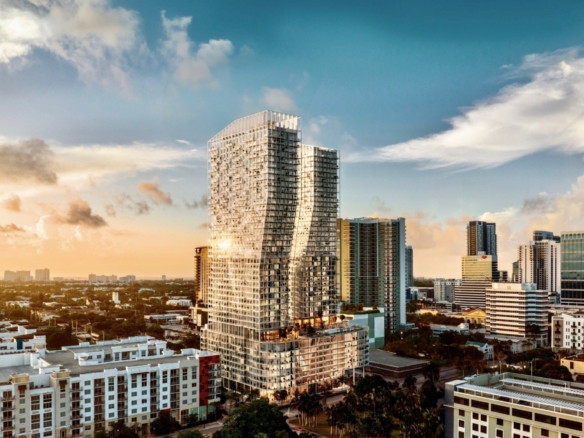
The groundbreaking at 1600 Edgewater is part of a broader construction expansion throughout the Omni area. Several nearby developments are progressing simultaneously through various stages of site preparation and foundation construction, signaling a significant shift in the neighborhood skyline.
Among the prominent nearby initiatives are Sense22, Biscayne 18, and 1775 Biscayne Boulevard. Together with 1600 Edgewater, these multi-family and mixed-use projects are establishing the area as one of Miami’s primary high-rise development hubs. Completion for 1600 Edgewater is currently expected in 2028.
Market Context for Real Estate Investors and Renters in Miami
The expansion of rental inventory in the Omni District reflects ongoing interest from developers in urban infill locations near Downtown Miami and Edgewater. Projects offering a combination of luxury rentals, affordable housing units, and retail spaces provide choices across multiple income segments while expanding regional housing supply.
For real estate participants watching Miami’s urban core, tracking foundation milestones and pipeline completions like those at 1600 NE 2nd Avenue offers insight into construction timing, commercial retail integration, and structural growth within emerging high-density corridors.
Source: World Red Eye